
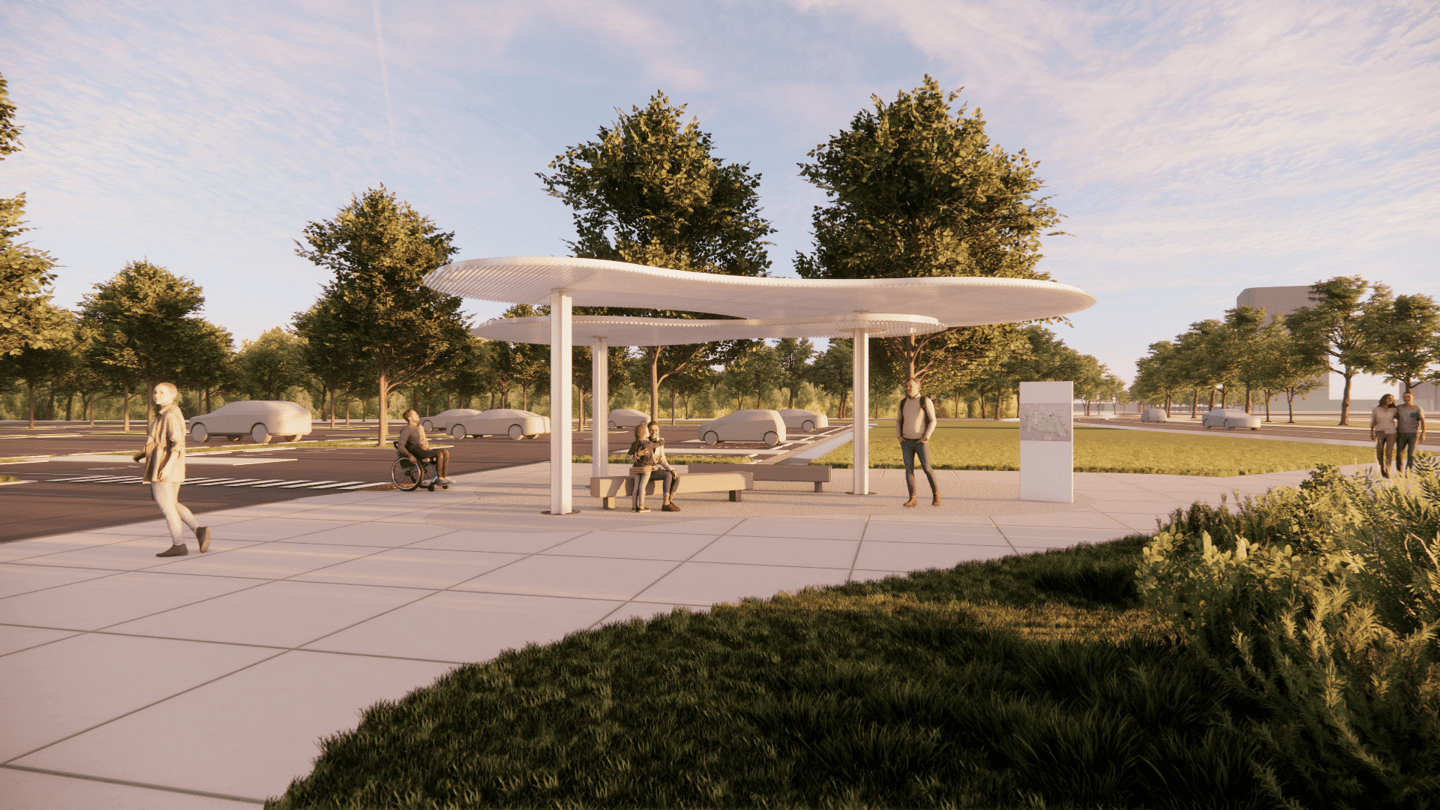
Rendering of the proposed Gateway shelter.
Once the gateway to opportunity for generations of immigrants, our plan for Liberty State Park, developed in collaboration with Arup and WRT, reshapes it into a climate-resilient public space that puts ecology, a celebration of its long history, and visitors at the center of its future.
Spanning more than 1,200 acres, nearly one and a half times the size of Prospect Park, Liberty State Park is a critical public asset on New Jersey’s waterfront, welcoming millions of visitors each year. But as a low-lying site built on fill, it faces severe risks from sea level rise, storm surge, and future climate events. Its aging infrastructure, fragmented layout, and lack of shade diminish the visitor’s experience and strain its capacity to serve a growing regional population.
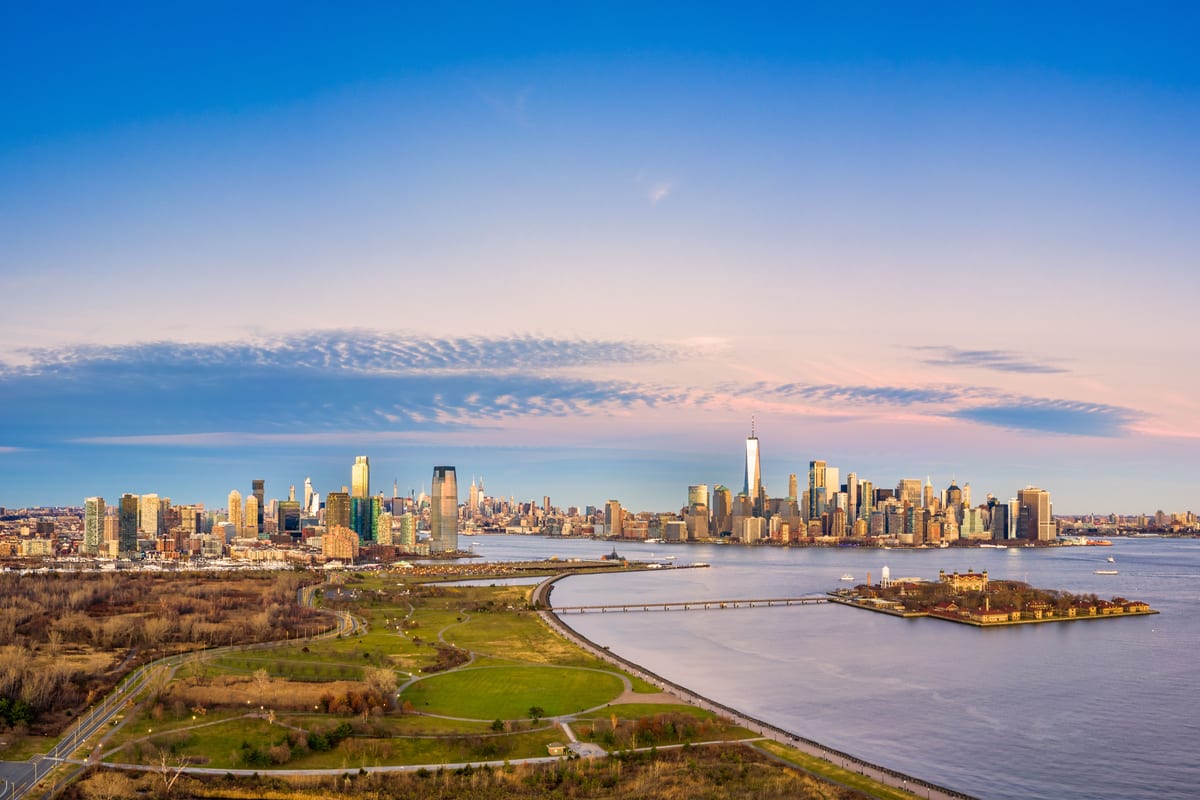
Aerial view of Liberty State Park, image by mandritoiu.
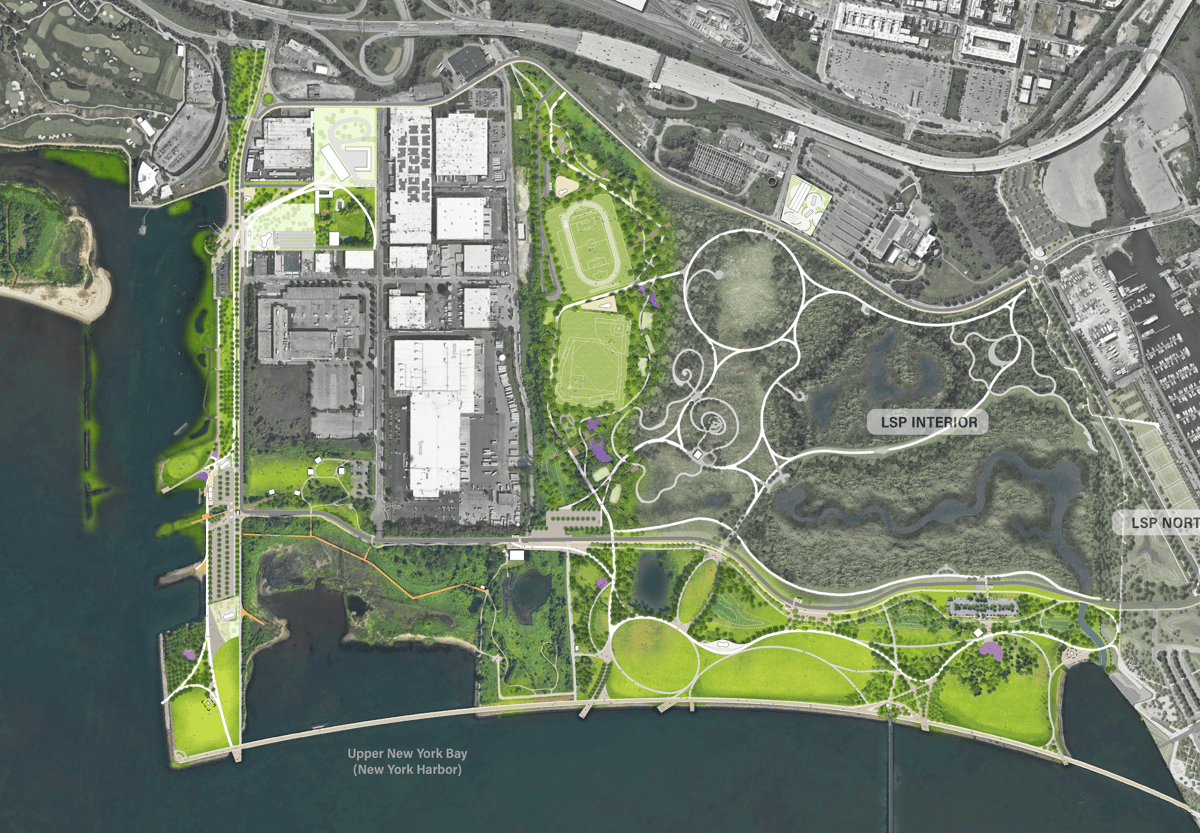
The Liberty State Park South Master Plan, including new landscape features, pathways, and built amenities, designed for the long-term use and resiliency of the park.
WXY led the design of the park’s built infrastructure, creating an architectural framework that addresses immediate deficiencies while establishing a foundation for long-term adaptability. The design introduces essential amenities, including restrooms, concessions, and bus shelters, engineered for durability, ease of maintenance, and equitable access.
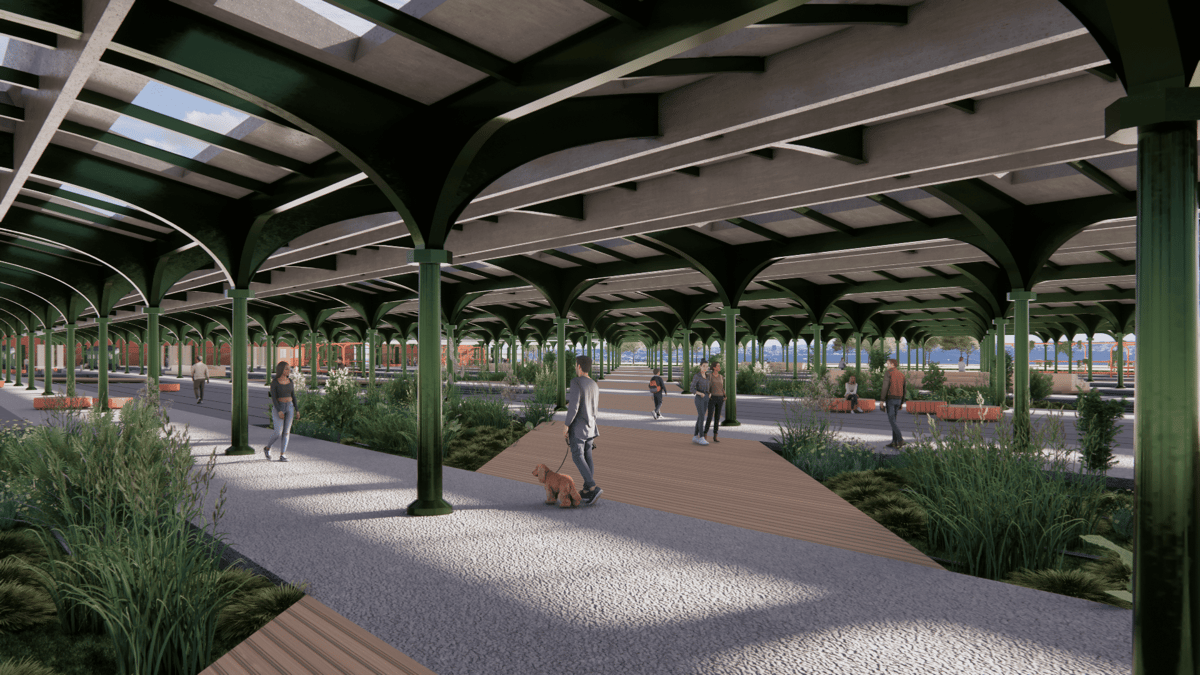
In the future, parts of the historic Jersey Central Railroad’s Communipaw train shed will be reopened to the public for historic interpretation and events.
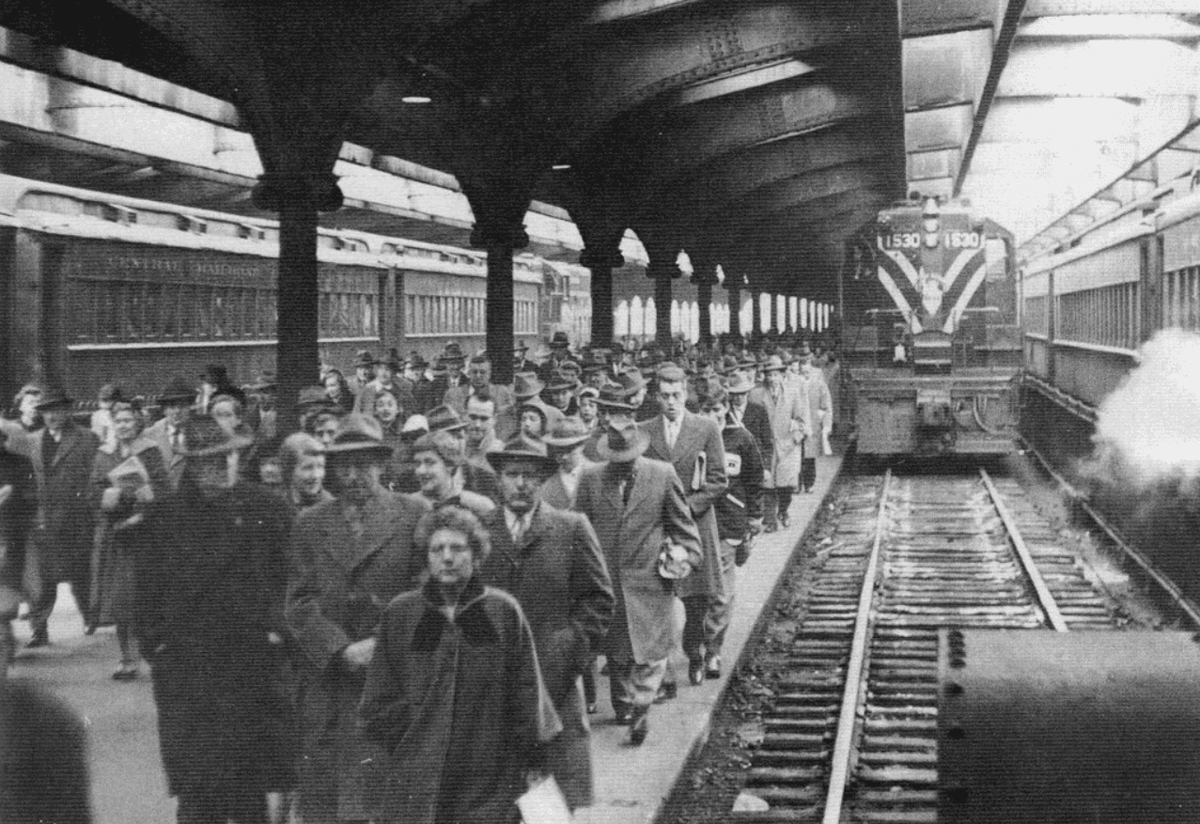
Rush hour at Central Railroad of New Jersey Terminal in 1953.
In the northern zone, the plan establishes a flexible framework for movement, gathering, and moments of pause across a dispersed landscape, prioritizing comfort, legibility, and adaptability over fixed structures. At the heart of the north phase, WXY developed a strategy for the phased rehabilitation of the 300,000-square-foot Communipaw Train Shed. Listed on both the state and national historic registers, the shed is envisioned as a civic anchor with potential for interactive cultural programming, including restored rolling stock. Exploration of reintroducing a historic locomotive is underway. In collaboration with WRT and preservation architect PACA, WXY integrated environmental performance and resilience strategies into the preservation approach, ensuring the historic structure can meet contemporary needs without compromising its character.
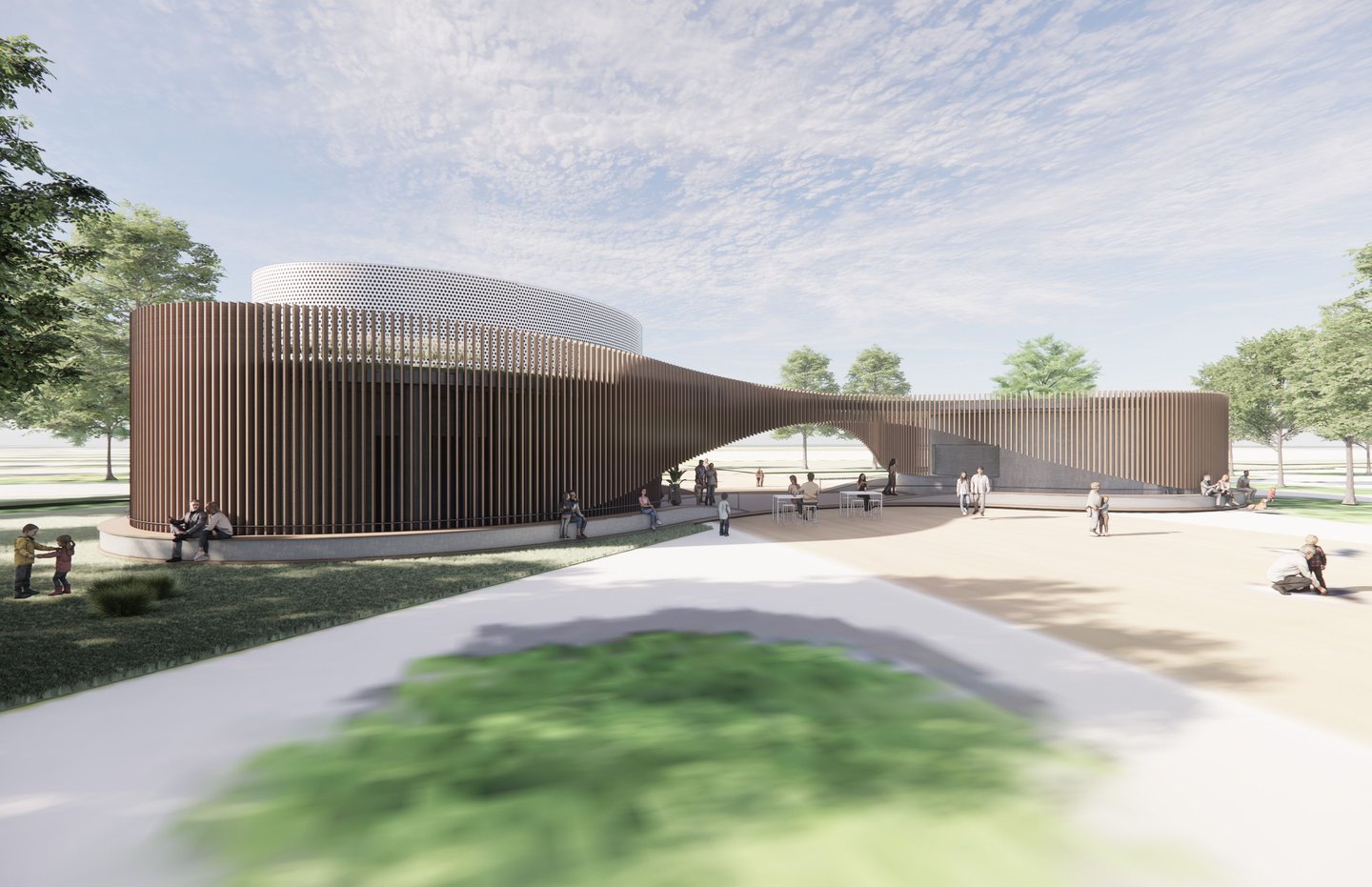
A perspective view of the proposed North Cove pavilion as a public threshold.
In the south phase of the site, every structure reflects a commitment to resilience and responding to long-term uses of the park. Buildings are elevated above projected flood levels and designed to withstand future floods and wave forces. Modular components and low-embodied energy materials are proposed to enable future disassembly and reuse. Across the site, WXY’s interventions reflect the broader design philosophy of public architecture responding to climate realities while enhancing comfort, legibility, and inclusion.
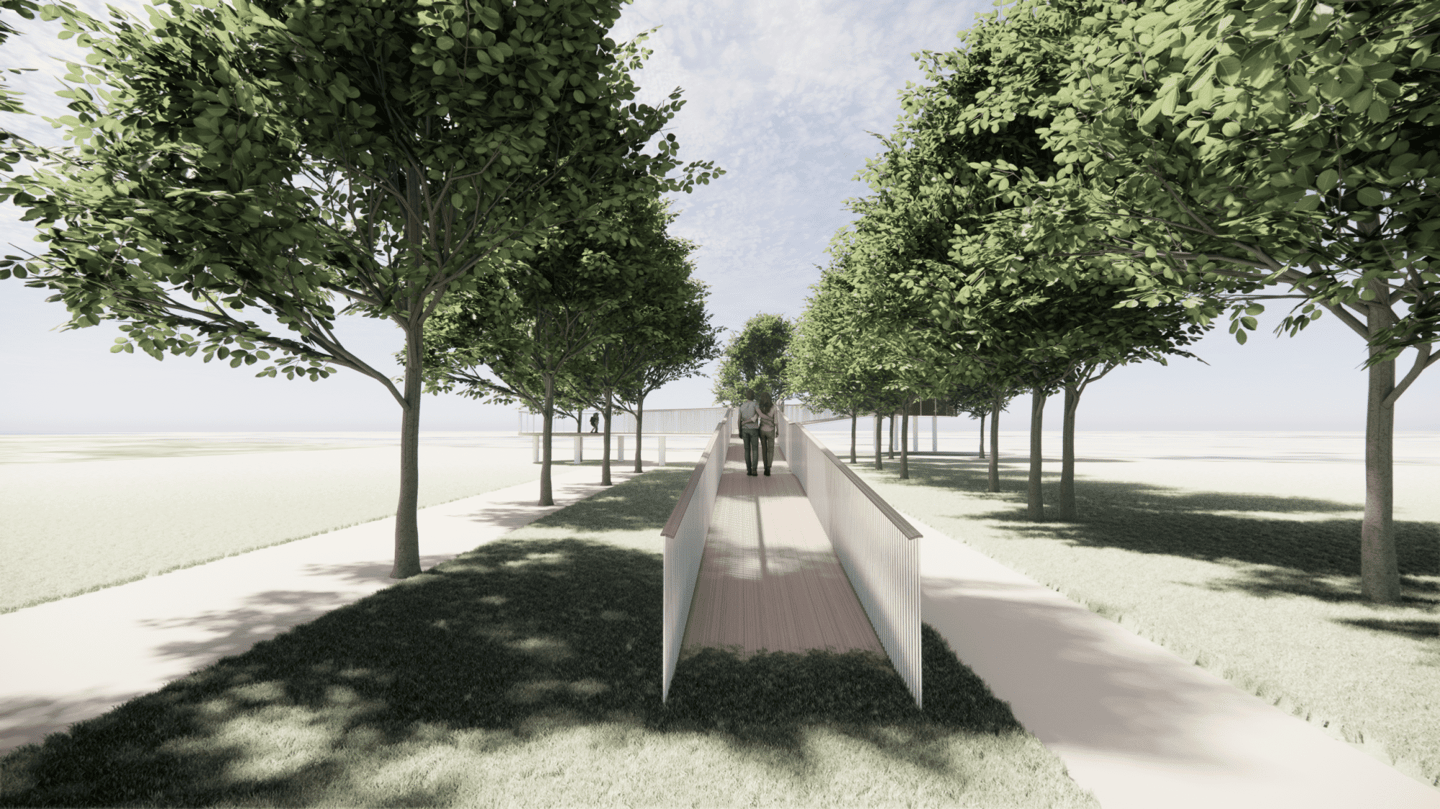
The proposed Canopy Walk would allow visitors to navigate the renaturalized interior of the park.
The design repositions Liberty State Park as a contemporary civic landscape that protects the community’s ecological edge and supports everyday use. By transforming passive space into programmable nodes, WXY’s work knits the park’s vast acreage into a connected, legible experience. From shaded gathering areas to robust rest areas and adaptive reuse of historic infrastructure, the design introduces a public architecture rooted in sustainability, equitable access, and cultural continuity.
Claire Weisz Architects LLP
d/b/a WXY architecture + urban design
212 219 1953
office@wxystudio.com
Careers ↗
New York
25 Park Place, 5th Floor
New York, NY 10007
Toronto
30 St. Patrick Street, 5th Floor
Toronto, ON M5T 3A3 Canada
Subscribe to our newsletter
Site designed by Clinton Van Arnam
Developed by Mario Giampieri