
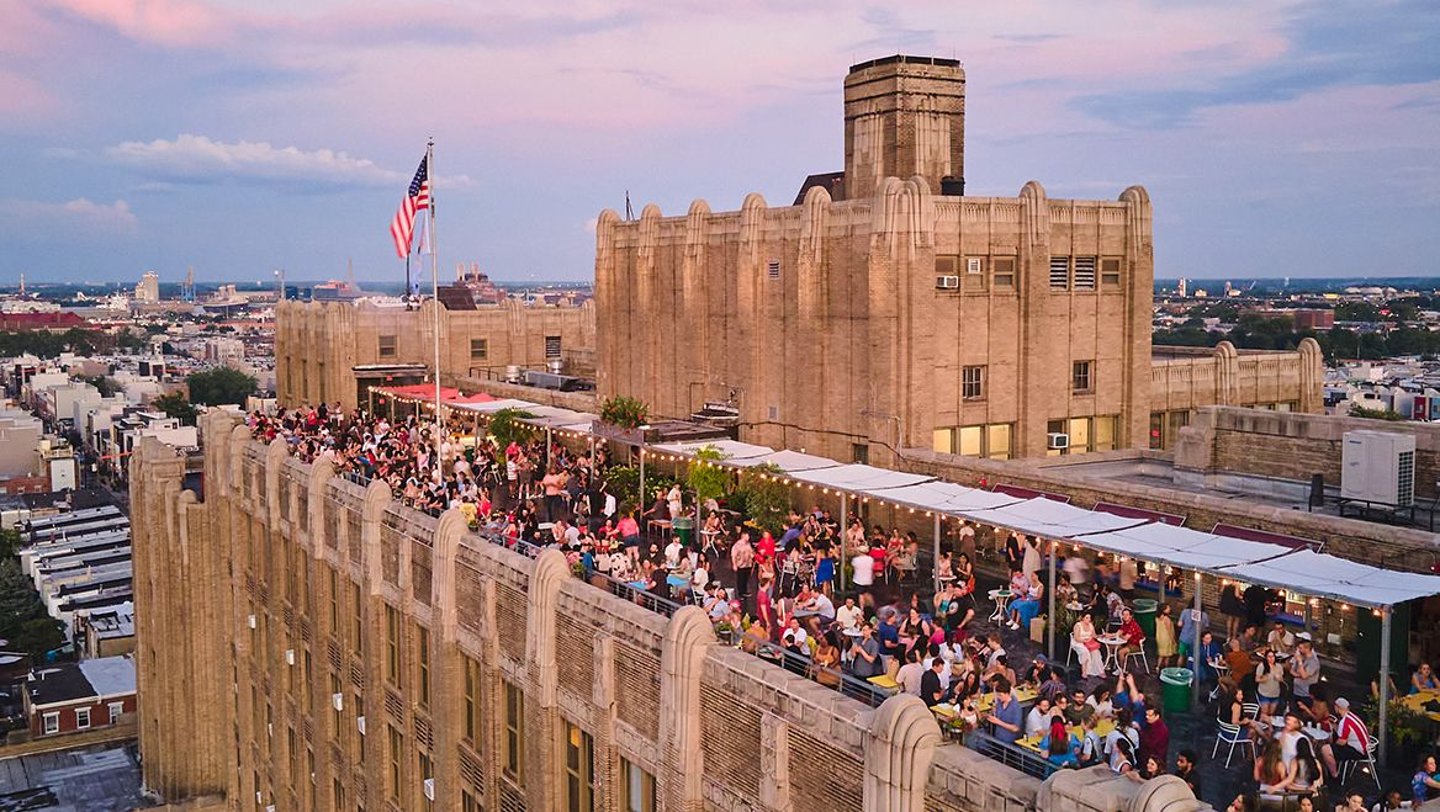
Bok High School in Philadelphia by Stephen Recchia
When a school closes, the loss carries social, emotional, and civic weight for the neighborhoods that rely on it. School buildings often anchor daily routines, shape local identity, and hold decades of collective memory. As communities across the country face declining enrollment, aging facilities, and changing demographics, the challenge is no longer just how to manage excess space. It is how to rethink these buildings as public assets.
A recent APA article on school reuse and repurposing highlights how districts, planners, and local governments are approaching this question with increasing care and creativity, from workforce housing in Connecticut to maker spaces and arts programming at Bok High School in Philadelphia. Adam Lubinsky, Principal at WXY, notes that many districts are now looking beyond simple disposition strategies, recognizing that these buildings continue to carry value long after classrooms empty.
That shift reflects a larger change in how institutions think about educational infrastructure. Schools are no longer viewed only through enrollment counts or utilization metrics. They are increasingly understood as part of a broader civic network that includes housing, public health, economic opportunity, workforce development, and neighborhood stability.
At WXY, that thinking informs our work with districts across the country. For Brevard Public Schools, WXY developed the district’s first comprehensive strategic facilities plan, combining research on enrollment, facilities, and evolving pedagogical needs with a decision-making framework designed to help the district adapt over time. In Philadelphia, WXY partnered with the School District of Philadelphia to create communication and engagement tools that translated highly technical facilities data into something communities could meaningfully understand and respond to. In Hillsborough County, WXY’s attendance boundary and facility study examined how school systems can adapt to growth, demographic shifts, and aging infrastructure while maintaining equitable access to education.
These projects are conversations about public trust, long-term stewardship, and what communities want their future to look like. The most successful approaches recognize that schools already function as civic infrastructure. Reimagining them requires more than efficiency. It requires listening closely to the people who live alongside them.
As districts nationwide confront difficult decisions about consolidation, closure, and reinvestment, planners and designers have an opportunity to help shape outcomes that preserve public value rather than diminish it. The question is not simply what happens after a school closes. It is what kind of civic life those spaces can continue to support next.
Claire Weisz Architects LLP
d/b/a WXY architecture + urban design
212 219 1953
office@wxystudio.com
Careers ↗
New York
25 Park Place, 5th Floor
New York, NY 10007
Toronto
30 St. Patrick Street, 5th Floor
Toronto, ON M5T 3A3 Canada
Subscribe to our newsletter
Site designed by Clinton Van Arnam
Developed by Mario Giampieri